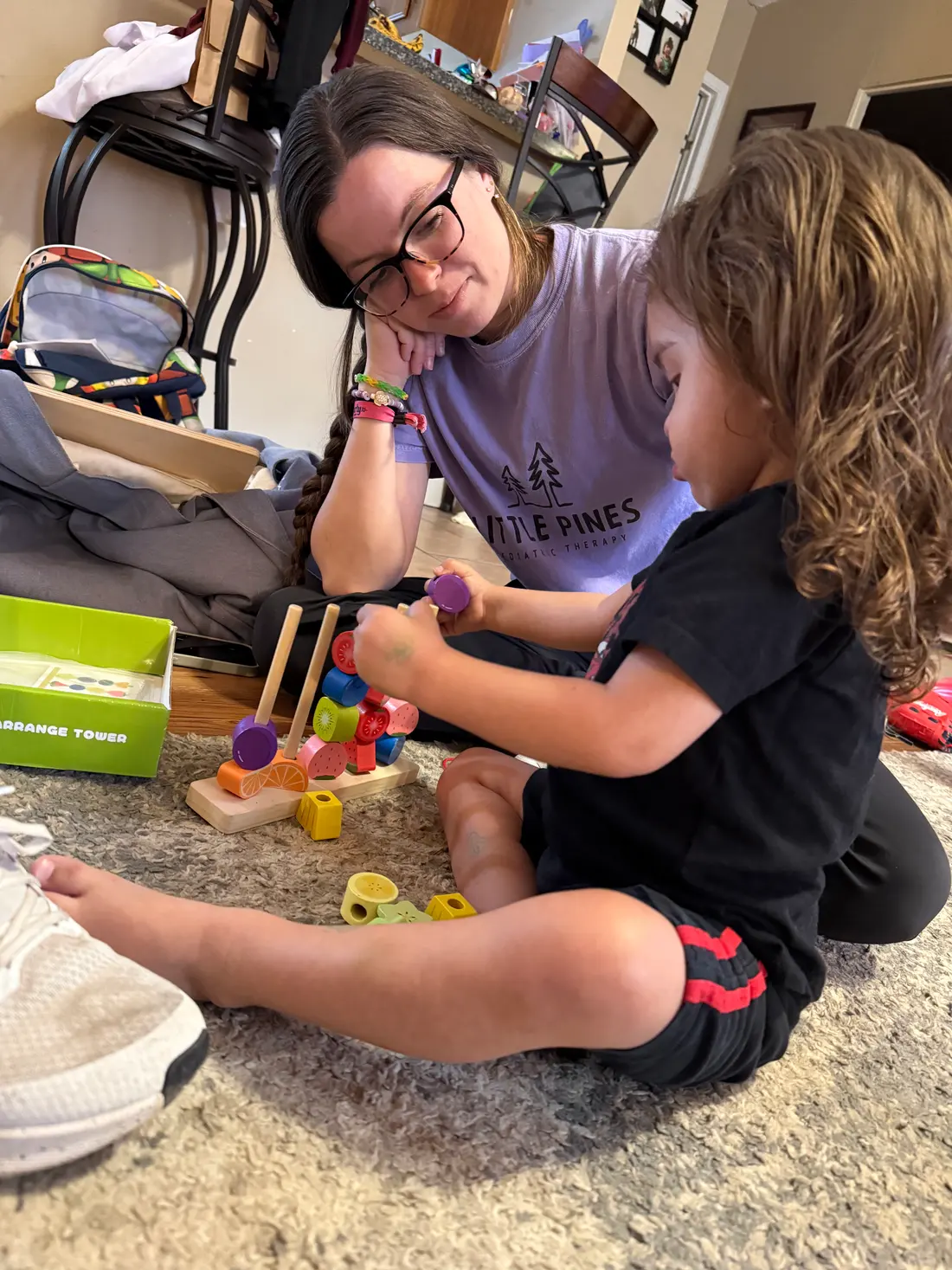
Children develop at different rates, and a slower start in one area doesn't tell you much on its own. What matters is whether a child can take part in the things their day asks of them: getting dressed, playing with other kids, managing a classroom, sitting down to a meal.
When a delay starts getting in the way of that participation, occupational therapy can help. We look at what's actually hard, why it's hard, and what skill would make the biggest difference to your family right now.
If you're not sure whether what you're seeing is worth a second look, an evaluation is a reasonable place to start. Sometimes the answer is that everything is on track, which is a useful answer too.
We support children with
- Delays in fine motor or visual motor development
- Difficulty with self-care skills like dressing, grooming, or feeding
- Coordination difficulties
- Autism Spectrum Disorder
- ADHD
- Down syndrome
- Cerebral palsy
- Genetic disorders and neurological conditions
- Emotional regulation challenges
- Handwriting readiness and school participation concerns
Recognize your child in this list? That's a good reason to reach out. An evaluation is how we find out whether therapy would help, and sometimes the answer is that everything is on track.
Our approach
Every evaluation begins with understanding the child, not just testing skills. We take time to learn each child's strengths, interests, routines, and family goals before developing an individualized treatment plan.
Therapy sessions are intentionally designed to be engaging while targeting meaningful functional outcomes that improve daily participation at home, at school, and in the community.
Early occupational therapy can improve independence, confidence, school readiness, social participation, emotional regulation, fine motor skills, feeding abilities, and overall family quality of life.
Have questions about developmental delays?
Tell us what you're seeing at home. We'll talk it through and help you figure out the right next step.
Other ways we help
- Infant DevelopmentEarly support for babies working on tummy time, feeding, movement, and sensory regulation.
- Sensory ProcessingStrategies for children who are overwhelmed by everyday input, or constantly seeking more of it.
- Feeding TherapySupport for selective eating, texture sensitivity, chewing and drinking skills, and mealtime stress.
- Autism Support ServicesChild-led, relationship-based therapy built around each child's strengths, interests, and goals.
- Executive FunctioningPractical strategies for planning, organization, working memory, and getting started on tasks.
- Fine Motor SkillsHand strength, grasp, and visual motor skills for writing, cutting, dressing, and play.
- School ReadinessHandwriting readiness, attention, transitions, and the self-care independence school expects.