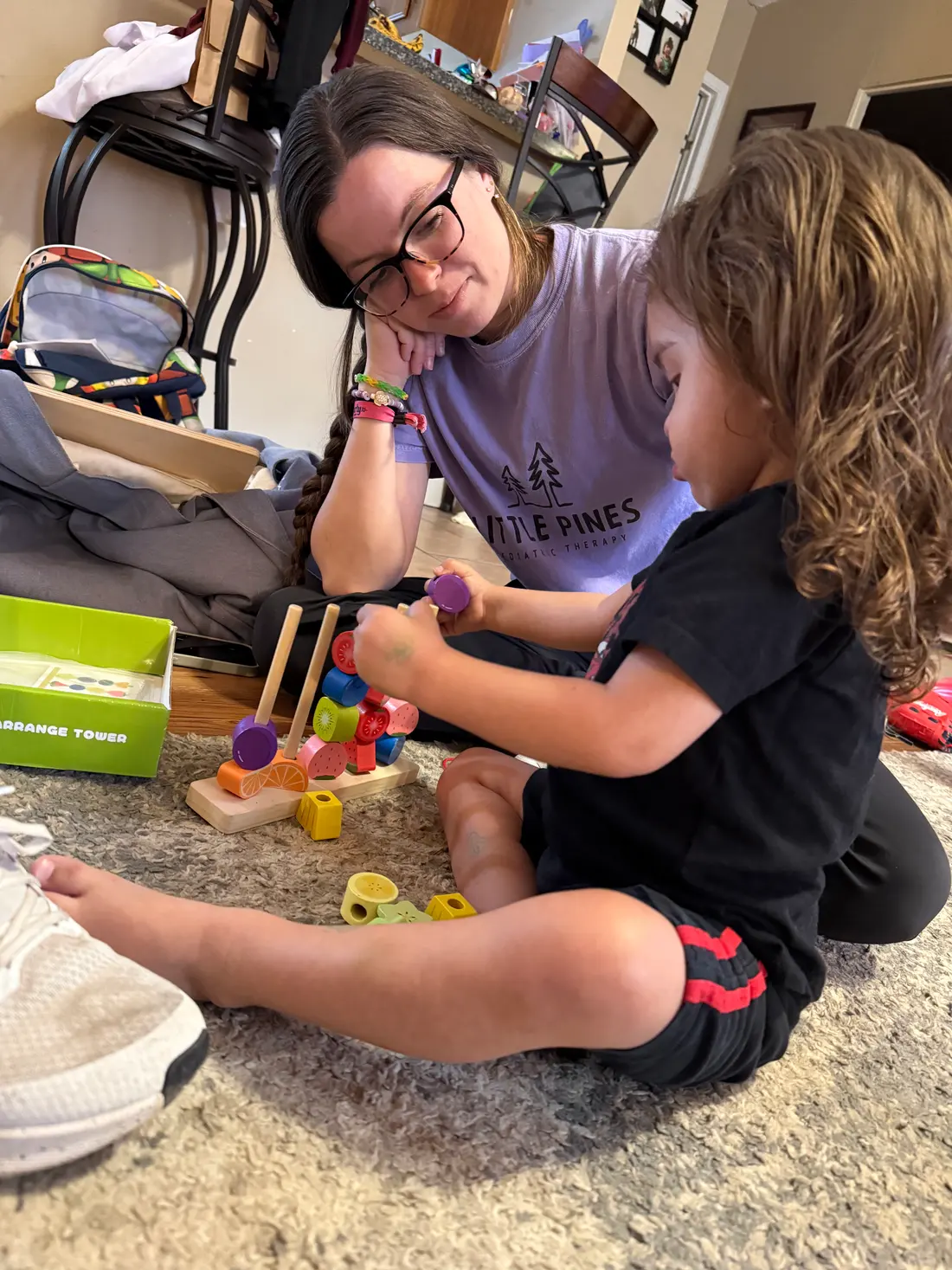
Fine motor skills are the small, precise movements children rely on constantly: holding a pencil, working a zipper, using scissors, buttoning a shirt, picking up a fork. When those movements are hard, the frustration usually shows up somewhere else: refusing to write, avoiding art, needing help to get dressed long after peers manage it alone.
Occupational therapy builds the underlying strength, coordination, and visual motor integration these tasks depend on, then practices them in the activities that actually matter to your child's day.
Fine motor work may help with
- An awkward or tiring pencil grasp
- Handwriting readiness and letter formation
- Visual motor integration, coordinating what the eyes see with what the hands do
- Difficulty with scissors, buttons, snaps, and zippers
- Weak hand and finger strength
- Difficulty with in-hand manipulation, like turning a coin or pencil in the fingers
- Using utensils and managing containers at mealtimes
- Avoiding coloring, building, or other tabletop play
Recognize your child in this list? That's a good reason to reach out. An evaluation is how we find out whether therapy would help, and sometimes the answer is that everything is on track.
Our approach
We start by watching how your child actually uses their hands, then work out whether the barrier is strength, coordination, motor planning, visual motor integration, or something sensory.
From there, therapy is built out of activities a child wants to do. Play is the vehicle, but the targets are functional: a grasp that holds up through a school day, dressing without help, taking part in art class without dread.
Have questions about fine motor skills?
Tell us what you're seeing at home. We'll talk it through and help you figure out the right next step.
Other ways we help
- Infant DevelopmentEarly support for babies working on tummy time, feeding, movement, and sensory regulation.
- Developmental DelaysSupport for children working toward milestones at their own pace, with goals built around daily life.
- Sensory ProcessingStrategies for children who are overwhelmed by everyday input, or constantly seeking more of it.
- Feeding TherapySupport for selective eating, texture sensitivity, chewing and drinking skills, and mealtime stress.
- Autism Support ServicesChild-led, relationship-based therapy built around each child's strengths, interests, and goals.
- Executive FunctioningPractical strategies for planning, organization, working memory, and getting started on tasks.
- School ReadinessHandwriting readiness, attention, transitions, and the self-care independence school expects.